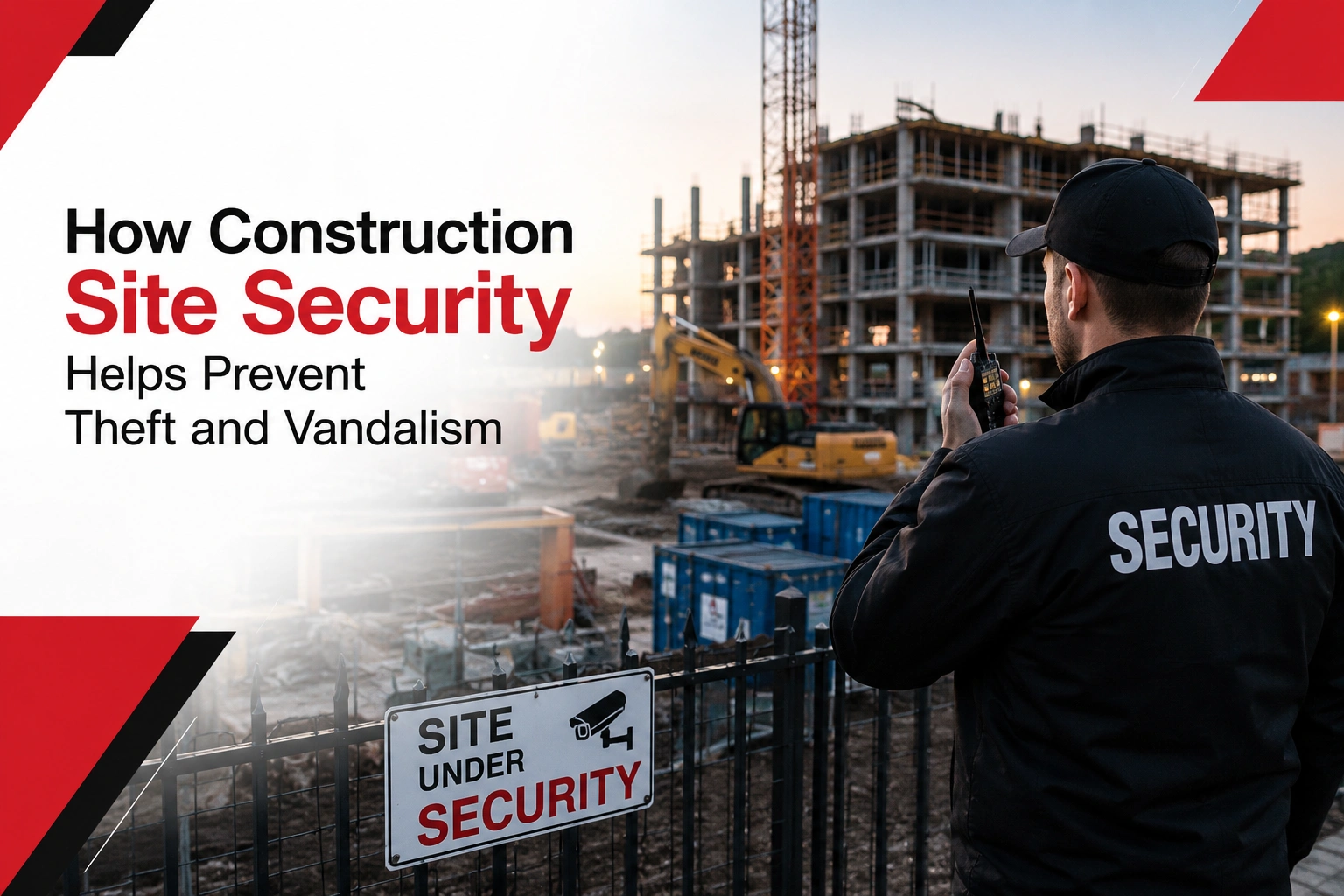
How Security Protects Construction Sites From Theft And Vandalism? After workers leave construction sites, they are vulnerable to vandalism, theft and unauthorised entry. Often, expensive tools, machinery, cables, building materials, and specialised equipment are left overnight. Temporary fencing, unfinished buildings, and changes in access points can also attract intruders. Construction security is a critical part of the site management process from the start of a project. It should not be introduced after an incident has occurred. Construction security is important for: Stopping theft and vandalism Preventing unauthorised access Protecting your tools, machines and materials Increasing site visibility after hours Security incidents can cause disruptions. Protect the public by preventing construction hazards The best approach for UK contractors, site managers and developers is usually a combination of physical safety, technology, well-trained security personnel, and effective site procedures. How can construction site security prevent theft and vandalism? Here are some of the most effective measures. Why Are Construction Sites Vulnerable To Theft And Vandalism? Criminals are attracted to construction sites because many of the items they find there can be easily resold or portable. Common targets include: Power Tools Plant and machinery Copper cable Fuel Construction Materials Electrical equipment Construction sites are constantly changing, which is another challenge. A project can start with one controlled entry but develop multiple access points later. As the work progresses, new subcontractors are hired, equipment is moved between different areas, and other sections of the construction site become active. A security system is not something that can be installed and then forgotten. Security on construction sites should change along with the project. Regular security audits can help to identify new vulnerabilities and exploits before criminals get a chance. 1. Secure The Site Perimeter A perimeter fence is often the first line against unauthorised entry. A strong fence, hoardings, gates, and other barriers can be used to make it more difficult for people to enter a construction site while clearly separating them from the surrounding public area. But merely installing fencing is not sufficient. Site managers should check regularly: Gates and locks Fencing or hoarding damaged Vulnerable perimeter sections Hidden areas Unauthorised gaps or access routes Even a strong fence with a gate that is not properly secured can leave the site open to attack. Depending on the location of the construction site, the equipment used and overall risk assessment, higher-risk projects may require a more robust perimeter. 2. Control Who Enters And Leaves The Site On a construction site, dozens or even hundreds of people can enter and leave during the day. Access may be required by workers, subcontractors and delivery drivers as well as clients, inspectors, visitors, and even clients. It can be difficult to identify who is authorised to be present on a site without an access-control system. Access control measures may include the following: Entrance security guards Sign-in procedure for visitors Identification checks Access cards or passes Entrances for controlled vehicles Registration of contractors It is not the intention to make access unnecessarily difficult. The goal is to establish a process that makes it easier for authorised individuals to enter, while preventing unauthorised entry. 3. Use Construction Site, Security Guards The technology is very useful, but a camera can’t physically react to an event. When suspicious activities occur, a trained construction site guard can respond in accordance with agreed-upon site procedures and provide active security. Security guards are available to help you with: Monitoring of entrances and exits Visitors and contractors must be checked Conducting site patrols Watching for vulnerable areas Identifying suspicious behaviour Reporting security concerns Response to incidents They can act as deterrents by their visible presence. When professional security personnel is present, someone who was considering entering an area that wasn’t well protected may act very differently. A manned guard can be an additional layer of security for large developments, construction sites that are isolated, projects that contain high-value equipment, or locations where there have been previous security issues. 4. Install CCTV Cameras In High-risk Areas Construction Site CCTV provides valuable visibility in areas that are difficult to monitor continuously. Cameras can be placed around: Entrances and Exits Storage compounds Plant and machinery Perimeter fencing Material storage areas Access points for vehicles Other vulnerable locations Modern CCTV systems can also be remotely monitored, allowing security personnel to monitor activity without the need for a guard at each location. However, CCTV is not the only way to protect a site. Ineffective monitoring, poor camera positioning, insufficient lighting, blind spots, or inadequate lighting can reduce the effectiveness of the system. When combined with other measures, such as security guards or access control, lighting and alarms, or secure perimeter protection, CCTV can be more effective. Businesses that operate CCTV systems should also be aware of their obligations under UK data protection laws when identifiable individuals are recorded. 5. Upgrade Security Lighting Intruders can move about a construction site in the dark without being noticed. Security lighting is a great way to improve visibility. Gates Entrances Perimeters Storage compounds Plant and machinery Vulnerable sites Lighting can improve the effectiveness and efficiency of CCTV systems, and also help security personnel to identify suspicious activities during hours of darkness. Motion-activated lights can be useful in areas with little or no movement at night. It is not enough to simply install the brightest floodlights. The lighting should be placed carefully to minimise blind spots, excessive reflections and deep shadows. It is important to have a consistent and clear understanding of the security risks. 6. Secure Tools, Machinery And Building Materials Perimeter security helps to prevent intrusions. Construction security must also take into account what will happen if a person gets past the perimeter. Internal security is important. You can store valuable and smaller tools inside. Containers with locks Cabins with security Tool vaults Compounds for controlled storage Wherever possible, high-value materials must also be placed away from areas that are vulnerable. Site managers can further reduce their exposure by coordinating the material deliveries with construction schedules. Delivery can be scheduled closer to the time the material is needed, rather than